
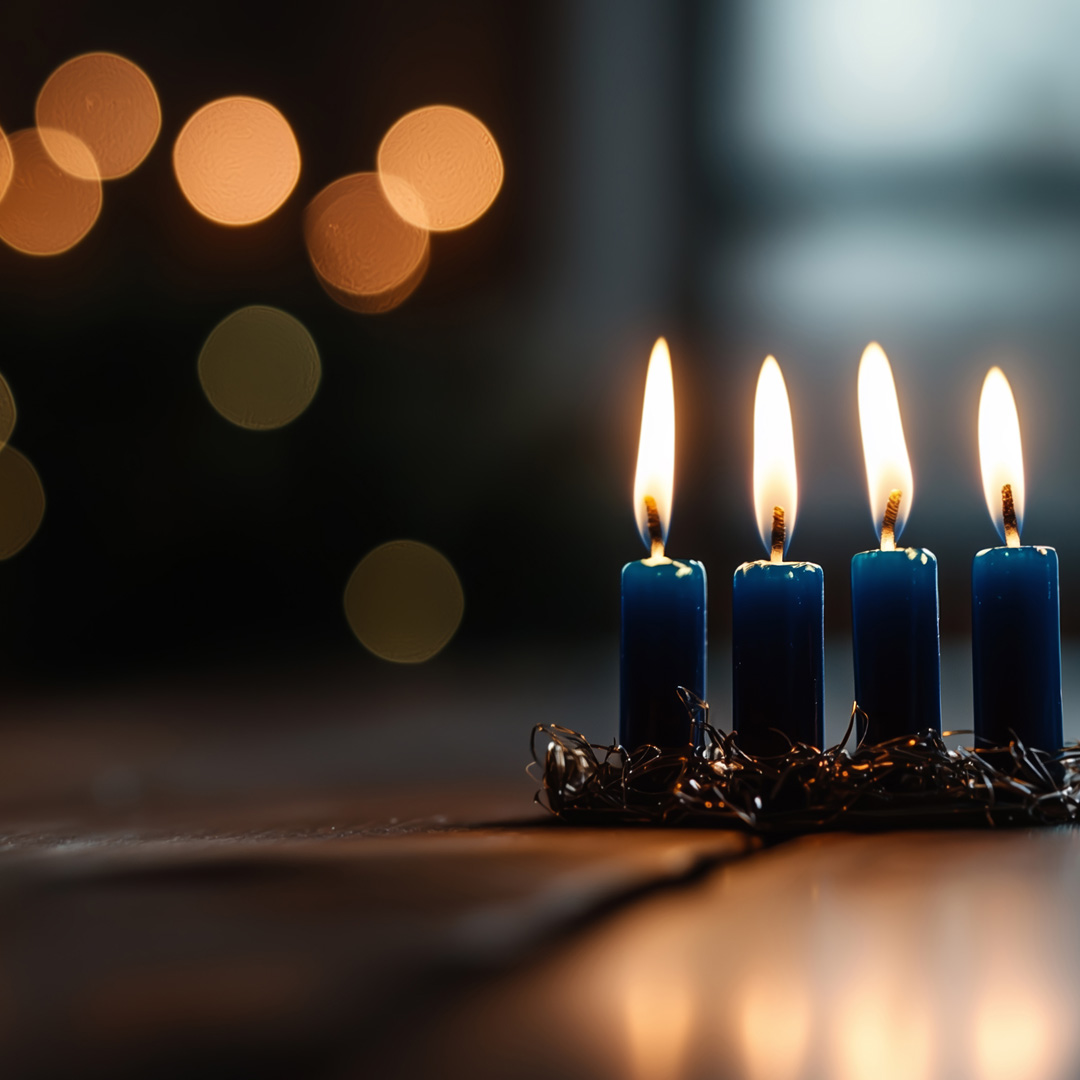
One of the most exciting and happy times on the Jewish calendar is the remembrance of the great miracle celebrated as Hanukkah—the Festival of Lights. This special event is also known as the Feast of Dedication, marking the re-dedication of the Temple after Jerusalem was liberated by the Maccabees. It was during this time that the miracle of the light occurred.
During the reign of the charismatic young military genius Alexander the Great, the Greek Empire expanded over much of the Middle East and reached into Asia. Alexander’s kingdom included Egypt, Turkey, most of modern Iran and Iraq, and even reached into India. One of the nations that came under Greek control was the nation of Israel. The Jewish state had never regained full operational independence following the return from Babylon. They were dominated in turn by Persians and the Egyptians, before Alexander’s rise to power.
When Alexander died at just 33 years of age, his empire was divided into four parts. God had revealed this to Daniel hundreds of years earlier in the vision of future world powers. Greece was portrayed as a leopard, which symbolized its rapid expansion, and the future division of the empire was foretold as well. “After that, I looked, and there before me was another beast, one that looked like a leopard. And on its back it had four wings like those of a bird. This beast had four heads, and it was given authority to rule” (Daniel 7:6).
Israel originally fell under control of the Egyptian branch of the Greek Empire, which was ruled by the Ptolemy family (of which Cleopatra was the most famous member). Over time, the Selucid family in Syria began to expand their power. Again, all of this was known ahead of time to those who read the prophetic visions of Daniel. “The goat became very great, but at the height of its power the large horn was broken off, and in its place four prominent horns grew up toward the four winds of heaven. Out of one of them came another horn, which started small but grew in power to the south and to the east and toward the Beautiful Land” (Daniel 8:8-9).
Antiochus Epiphanes, an evil pagan ruler of the Selucids captured Jerusalem in the 2nd century BC. “Because of rebellion, the LORD’s people and the daily sacrifice were given over to it. It prospered in everything it did, and truth was thrown to the ground” (Daniel 8:12). Antiochus defiled the Holy of Holies in the Temple, sacrificing pigs on the altar and raising a statue of the Greek god Zeus.
This act of great evil sparked a widespread rebellion against Antiochus, who had originally been viewed by many as a good alternative to Ptolemaic rule. Under Judas, given the name Maccabee, “the hammer” the Jewish revolt overthrew the invaders and gave Israel the last self-determination it would know until the modern era.
In his drive to desecrate the Temple, Antiochus had destroyed all the implements of Jewish worship, including the golden menorah that burned continually as a witness to God’s unfailing love. As the Temple was being cleansed, new implements had to be prepared. According to tradition, a replacement for the lamp stand was formed out of swords beaten into shape to hold the sacred oil and hastily welded together.
They only had enough consecrated oil to light their makeshift menorah for one day, and it took seven days to consecrate the special oil that was commanded to be used for the candlestick in the Temple. In faith, they lit the lamp that signified God’s presence among His people—and it burned for eight days until a new supply of oil was ready! When you see the menorahs that are used as Hanukkah decorations, they are meant to be a reminder that the light didn’t go out because of God’s miraculous provision.