
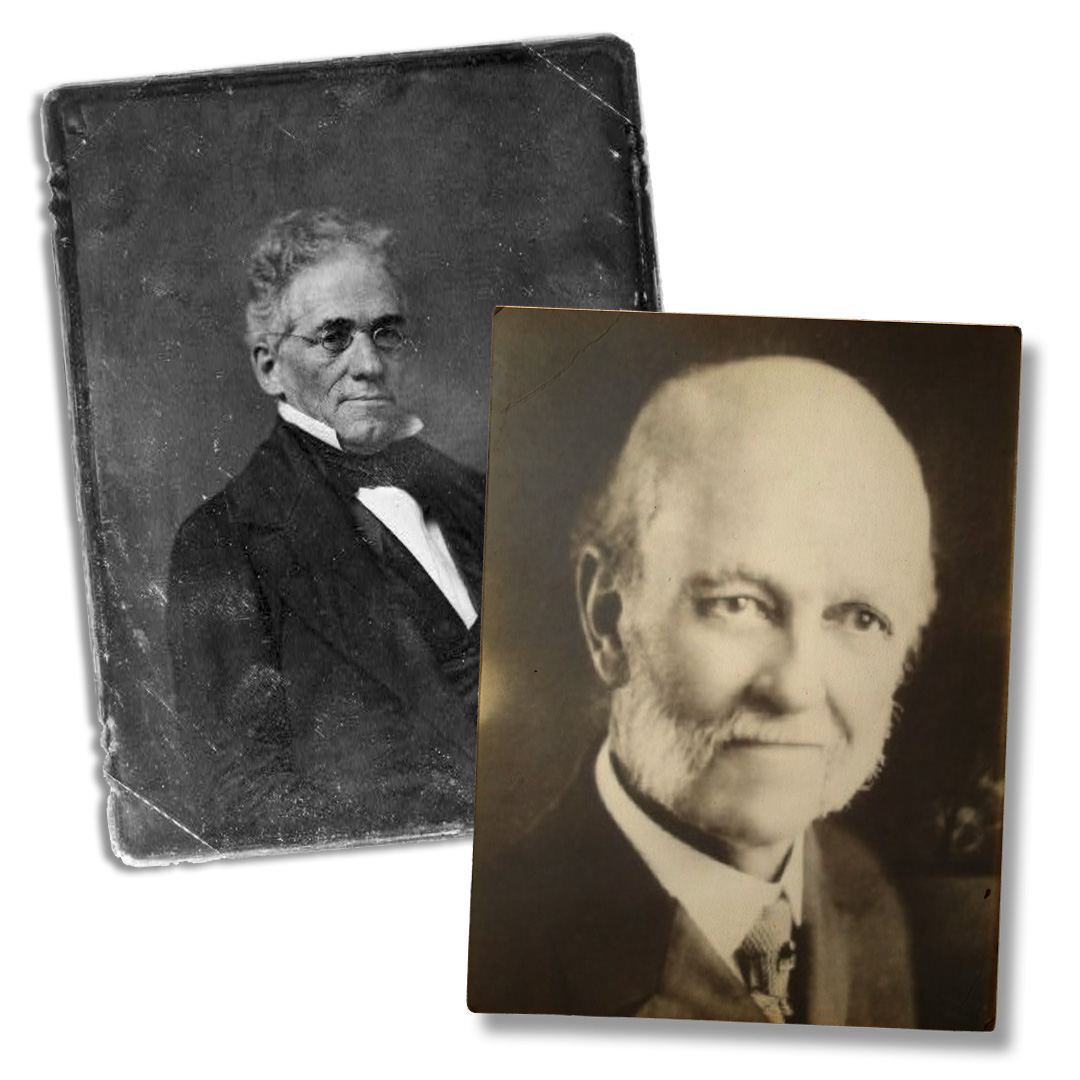
When America was established, Jewish people in most of the world faced intense persecution and discrimination. They were restricted as to where they could live, what businesses they could enter, and often, their belongings were taken from them on the most flimsy pretexts. America would be different. The freedom of religion prized by our Founding Fathers was extended to small Jewish communities that had taken root in America. And the contributions of financiers like Haym Solomon to the success of the Revolution cannot be overstated. Support of the Jewish people only continued to grow as America became a powerful nation.
The revival that swept America beginning in the 1800s, the Second Great Awakening, played a conspicuous role in the formation of the Christian Zionist movement. Men such as Revivalists Peter Cartwright and Charles Finney led the charge. The Second Great Awakening was a return of the revival popular in the early 18th century. The renewed pursuit of personal holiness was characterized by the notion of the God-called common man, who carried the Gospel to his friends and neighbors. This was in high contrast to the highly educated theologians who led their congregations in established churches.
The Second Great Awakening had a profound impact on the young country, even after its immediate passion and enthusiasm faded. Its influence was felt in the formation of new denominations, a more democratic society, and in the building of orphanages, schools, universities, hospitals, and programs to assist the poor. As one after another began to share the Good News with their neighbors, people began to witness God’s grace and mercy.
Among the groups birthed from that great revival were those dedicated to helping the Jews—and particularly to aid in establishing a homeland for God’s Chosen People. Books by William Blackstone and Professor George Bush were instrumental in outlining what the Christian Zionism movement in the United States would eventually become. They helped open the door for the likes of Theodor Herzl and other advocates of a Jewish homeland. It can be said that both Great Awakenings helped to birth the Christian Zionism movement.
Christians drawn to the Second Great Awakening also believed that it would usher in the rebirth of the Land of Israel and a return of the Messiah. Spurred on by Genesis 12:3 as the center of gravity for their beliefs (“I will bless those who bless you, and I will curse him who curses you; and in you all the families of the earth shall be blessed”) Christian Zionists have become even more vocal in their support for Israel. Many today believe that verse of Scripture in its most literal form: If Christians bless Israel by strongly supporting the Jewish people, they will reap God’s blessings. If they curse Israel or intentionally harm the Jewish people, the opposite will be true.
Not only did early American leaders treat the Jewish people with kindness and respect, but they were supportive of efforts to establish a homeland for them. This came to a climax in the post World War II era under a most unlikely president, Harry Truman. From the time he arrived in Washington as a U.S. Senator from Missouri, Truman was a friend to the Jewish people. The early whispers of Hitler’s anti-Semitism and finger-pointing at the Jews proved unsettling to Truman, as was the 1939 White Paper issued from the halls of British Parliament that severely restricted Jewish immigration to the Holy Land. Truman wrote that the document made trash out of the Balfour Declaration and served only to swell the already lengthy list of British capitulations to the Führer’s Nazi regime.
He was so disturbed that in 1941, he became a member of the American Christian Palestine Committee, a pro-Zionist organization. When a resolution supporting the creation of a Jewish state was circulated in the Senate, Truman urged caution regarding the timing given the world situation but made his beliefs crystal clear. He wrote, “When the right time comes I am willing to help make the fight for a Jewish homeland in Palestine.”
Little did the junior senator from Missouri know he was about to become an historic figure and that the “right time” was just around the corner. After making his mark in the Senate, and to the astonishment of all and the chagrin of some, Truman was tapped by Franklin Roosevelt to serve as his fourth vice president. He was selected to replace Henry Wallace. Although Truman reluctantly acquiesced to the demands of the president and the Democratic National Party, the label of the “Second Missouri Compromise” was firmly affixed by some to the selection of Truman as the vice presidential candidate.
Harry S Truman was sworn in as vice president of the United States on January 20, 1945. Roosevelt and Truman rarely conferred, and when Roosevelt died just 82 days into Truman’s vice presidency, the new president knew very little of his predecessor’s plans for the end of the war and its aftermath. He had not even been told of the existence of the Manhattan Project to create the atomic bomb until after taking office! However, Truman’s Midwestern values and ability to meet hard issues head-on seemed to guide him. His love for the Bible (he had read it through twice by age 12) gave him a natural inclination to favor “God’s Chosen People” in their quest for a safe homeland.
Just as FDR had been a student of the land of Palestine, Truman was a student of its people. As a young man, one of his most cherished belongings was a set of essays that had been edited by Charles Francis Horne. The eight volumes contained essays about “Great Men and Famous Women.” It was in the pages of these books that he read and reread the stories of David, Solomon, and others. He had pored over the story of Nebuchadnezzar’s capture of the children of Israel and his ensuing madness. Young Harry studied the life of Cyrus the Great, who willingly allowed the Jewish captives to return to Palestine.
Upon taking office, Truman found his inclination to support the Jewish people challenged by many in the government. The State Department, headed by Secretary Edward R. Stettinius Jr., held a decidedly pro-Arab stance. On Wednesday, April 18, 1945, Secretary Stettinius wrote to the newly inaugurated president: “It is very likely that efforts will be made by some of the Zionist leaders to obtain from you at an early date some commitments in favor of the Zionist program which is pressing for unlimited Jewish immigration into Palestine and the establishment of a Jewish state…. The question of Palestine is, however, a highly complex one and involves questions which go far beyond the plight of the Jews in Europe. If this question shall come up, therefore, before you in the form of a request to make a public statement on the matter, I believe you would probably want to call for full and detailed information on the subject before taking any particular position in the premises. I should be very glad, therefore, to hold myself in readiness to furnish you with background information on the subject at any time you may desire.”
Perhaps it was Secretary of Defense James Vincent Forrestal, who best summed up the views of the Washington establishment when he said, “You don’t understand. There are four hundred thousand Jews and forty million Arabs. Forty million Arabs are going to push four hundred thousand Jews into the sea. And that’s all there is to it. Oil—that is the side we ought to be on.”
The same thinking was still in vogue among many when the United Nations began debating the issue of Jewish statehood in the fall of 1947. But Truman remained staunch in his decision to support the creation of Israel. In his memoirs, Truman wrote: “The question of Palestine as a Jewish homeland goes back to the solemn promise that had been made to them [the Jews] by the British in the Balfour Declaration of 1917—a promise which had stirred the hopes and the dreams of these oppressed people. This promise, I felt, should be kept, just as all promises made by responsible, civilized governments should be kept.”
When the vote was finally taken, (requiring a two-thirds majority to take effect) it passed by a 33-13 margin, with 11 countries either abstaining or not present. The United States had used its influence to encourage other nations to join in supporting the rebirth of Israel, and it worked. When the partition vote was passed, the Jews, who had been homeless for 2,000 years, were near the day when they would be homeless no longer. Rabbi Isaac Herzog proclaimed, “After a darkness of 2,000 years, the dawn of redemption has broken.”
The United States of America, in the year of its 172nd anniversary, was the first nation to recognize the sovereign State of Israel; the USSR followed three days later. Support from the United States’ chief executive gave Israel an advantage that was essential for its survival. Without the deterrent offered by U.S. backing, Israel’s enemies on all sides may well have been much more pro-active in waging war, and the outcome would have been completely disastrous for the new Jewish state.
Truman would later recall: “One of the proudest days of my life occurred at [6:11] p.m. on Friday, May 14, when I was able to announce recognition of the new State of Israel by the government of the United States. In view of the long friendship of the American people for the Zionist ideal, it was particularly appropriate that our government should be the first to recognize the new state.”
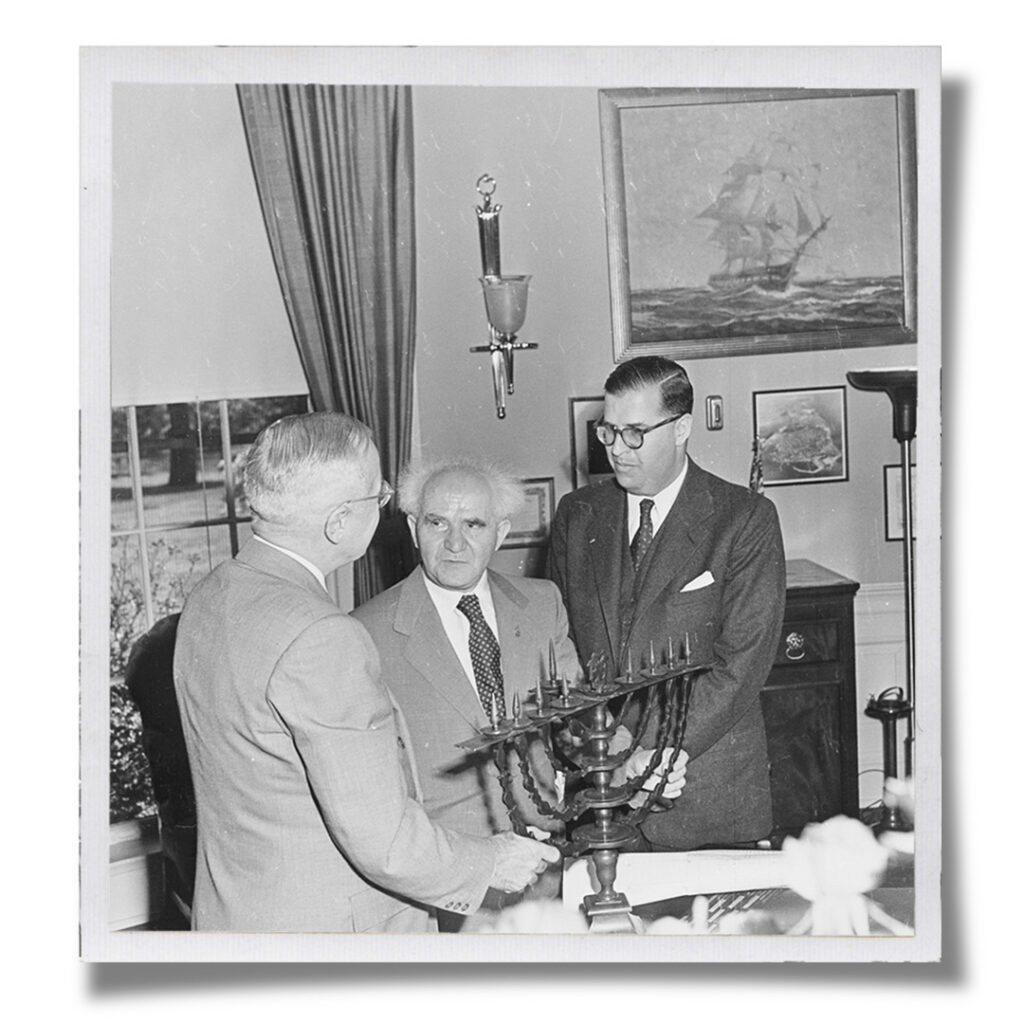
Approximately a year after Truman acknowledged the newly formed State of Israel, Isaac Halevi Herzog, the chief rabbi of Israel, visited the White House. As tears flowed down Truman’s face, the Israeli dignitary blessed the president with these words: “God put you in your mother’s womb so you would be the instrument to bring about Israel’s rebirth after 2,000 years.”
America’s support for Israel faced one of its most severe tests in 1973 during the Yom Kippur War. In the face of an oil embargo declared by OPEC (the Organization of Petroleum Exporting Countries) President Nixon gave the orders to help Israel anyway. It is no exaggeration to say that Israel could not have survived without that assistance.
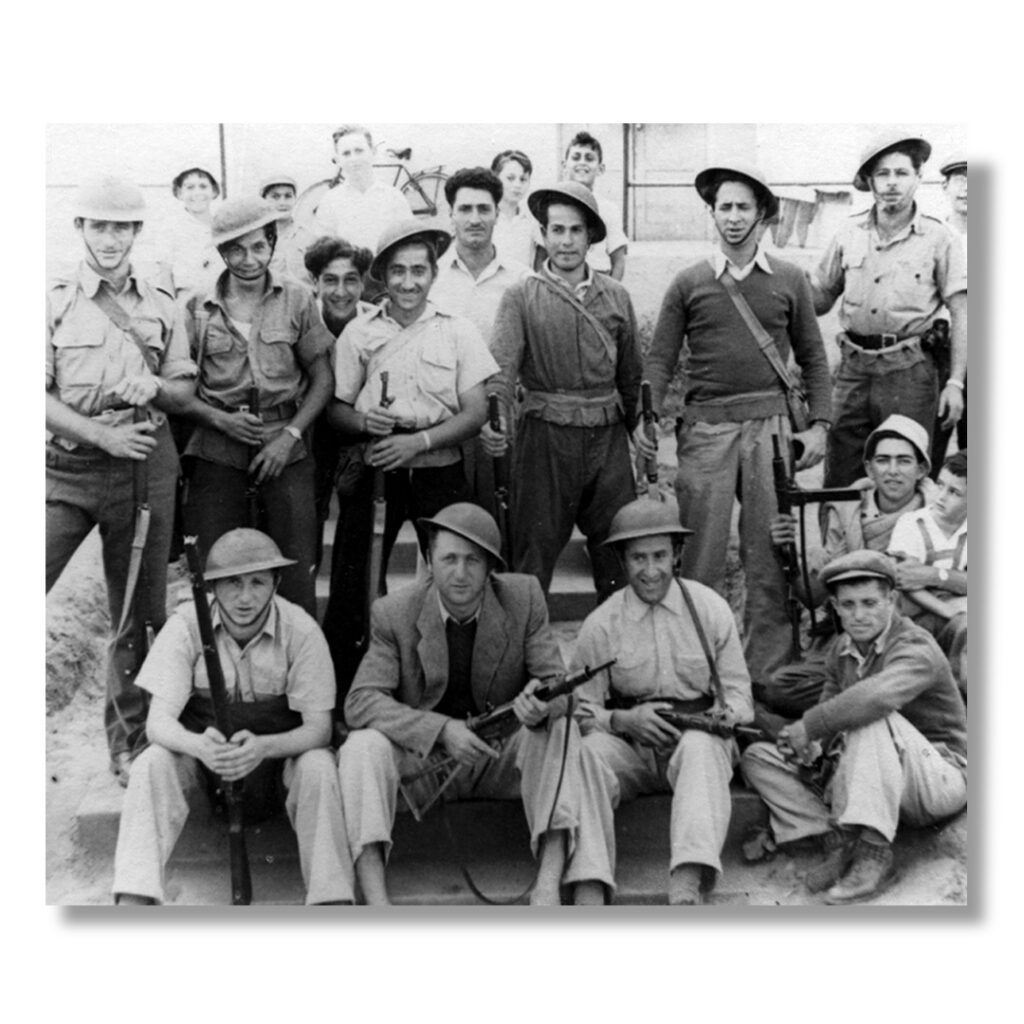
On October 6, Yom Kippur, the Day of Atonement and holiest day of the Jewish year, the Arab Coalition, comprised of Egypt, Syria, and Jordan, struck Israel with a sneak attack in the hope of finally driving the Jews into the Mediterranean. Israel was tragically caught off-guard, as most of its citizenry were in synagogues, and its national radio was off the air. Because people were enjoying a restful day of reflection and prayer, Israel had no immediate response to the coordinated attacks. Israeli intelligence had not seen the assault coming, and the military was ill-prepared for war.
At the outset of hostilities, Egypt attacked across the Suez Canal. The battle raged for three days with Egyptian forces advancing nearly unopposed into the Sinai Peninsula. On the northern border, Syria launched an offensive on the Golan Heights. The initial assault was also successful. By the third day of fighting, several thousand Israeli soldiers had been killed. More Israeli soldiers fell on the first day of the Yom Kippur War than in the entire Six-Day War of 1967. Forty-nine planes, one-third (more than 500) of her tank force, and a good chunk of the buffer lands gained in the Six-Day War were also lost.
The Israelis seemed to be on the brink of another holocaust. On the fourth day of the war, Prime Minister Golda Meir reportedly opened up several silos and pointed the nuclear-tipped missiles toward Egyptian and Syrian military headquarters near Cairo and Damascus. The so-called “Samson Option” named for the Old Testament judge who ended his own life by destroying a temple packed with Philistines was on the table. Israel’s great military hero Moshe Dayan reportedly said, “The situation is desperate. Everything is lost.”
In Washington, President Richard Nixon personally intervened in inter-cabinet squabbles between Secretary of State Kissinger and Secretary of Defense Schlesinger over how America should respond. Nixon came straight to the point, announcing that Israel must not lose the war. He ordered that the deliveries of supplies, including aircraft, be sped up and that Israel be told that it could freely expend all of its consumables (ammunition, spare parts, fuel, and so forth) in the certain knowledge that these would be completely replenished by the United States without delay.
Nixon’s insistence that armaments be airlifted to Israel to ensure her victory was because the president assigned a great sense of urgency to the task. White House aide Alexander Haig later recalled that Nixon said, “You get the stuff to Israel. Now. Now!” As soon as the scope and pattern of Israeli battle losses emerged, Nixon ordered that all destroyed equipment be made up out of U.S. stockpiles, using the very best weapons America possessed. The president asked Kissinger for a precise accounting of Israel’s military needs, and Kissinger proceeded to read aloud from an itemized list. “Double it,” Nixon ordered. “Now get the hell out of here and get the job done.”
In a Jerusalem Post editorial published later, Nixon insider Leonard Garment was quoted as saying: “It was Nixon who did it. I was there. As [bureaucratic bickering between the State and Defense departments] was going back and forth, Nixon said, ‘This is insane…’ He just ordered Kissinger, ‘Get your [behind] out of here and tell those people to move.’”
Every available Amer-ican plane transported conventional arms to Is-rael. The resulting supply to defend Israel was larger than the Berlin airlift that had followed World War II, and it literally turned the tide of the war. Nix-on’s quick action saved Israel from almost certain extermination and the world from possible nu-clear war. He had carried Kennedy’s agreement to militarily support Israel to the next logical level—a full military alliance. The Israel Defense Forces (IDF) launched a counteroffensive within the week and drove the Syrians to within 25 miles of Damascus. Trying to aid the Syrians, the Egyptian army went on the offensive, all to no avail. Israeli troops crossed the Suez Canal and encompassed the Egyptian Third Army. When the Soviets realized what was happening, they scrambled to further assist Egypt and Syria. The Soviet threat was so real Nixon feared direct conflict with the USSR and elevated all military personnel worldwide to DefCon III, meaning increased readiness that war was likely. However, a ceasefire was finally worked out between the United States and the USSR, adopted by all parties involved, and the Yom Kippur War—called the Ramadan War by Muslims—was ended.
Like all nations of the world, America is evaluated, judged, and measured by God, receiving His blessing or judgment, in direct proportion to our treatment of Israel. This has been true throughout our history, and our support of the Jewish people is one of the primary reasons America has been so greatly blessed. If we turn our backs on Israel, we will suffer the consequences.