
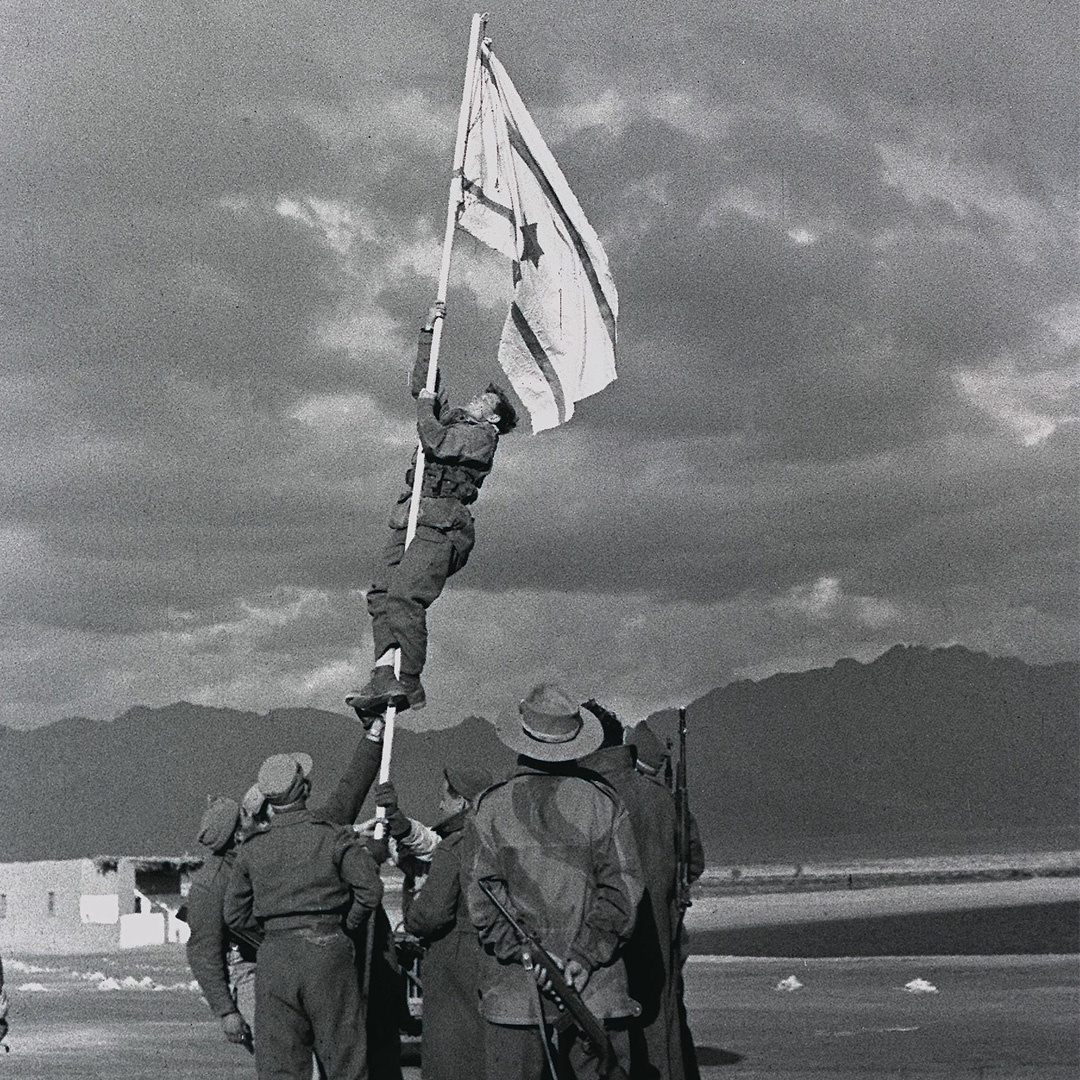
Today Israel is facing new threats of attack and war, but that is nothing new. Israel has been fighting to survive ever since the miracle rebirth of the Jewish state in 1948. Take a moment to look back at how that long history of conflict began.
On May 14, 1948, the day on which the British Mandate expired, the Jewish People’s Council gathered at the Tel Aviv Museum and approved a proclamation declaring establishment of a Jewish state in Eretz Yisrael, to be known as the State of Israel. In an official cablegram from the Secretary-General of the League of Arab States to the UN Secretary-General on May 15, 1948, the Arabs stated publicly that various Arab Governments were “compelled to intervene for the sole purpose of restoring peace and security and establishing law and order in Palestine.”
That same day, Arab regular army forces from Egypt, Syria, Lebanon, Jordan and Iraq joined smaller units from Saudi Arabia and Yemen to fight against the Jewish forces. They were in many cases trained and equipped by the British. Very few countries would have anything to do with support of Israel. One of the few that sold military equipment to the fledgling state was Czechoslovakia. Though they were fighting with antiquated equipment and often against superior numerical opponents, the men and women of the Israel Defense Forces were fighting for more than their lives…they were fighting for their homeland and their people.
In addition, the fledgling Israel army was strengthened by thousands of volunteers from around the world, many of them Christians who joined the fight. In many cases against the wishes of their own governments, these men, known in Israel as the Machal (Volunteers from Outside the Land of Israel) risked and in many cases gave their lives so that the Jewish state could live. Most of these volunteers were veterans of World War II, and their assistance and experience were invaluable to the Jewish forces.
When the war broke out, many intelligence experts, including the CIA and the British Foreign Ministry, predicted that the Arabs would eventually win. But such evaluations did not take into account either the spirit of the IDF or the divine blessing that strengthened their hands for war. That initial campaign lasted nearly a year, and when the fighting finally ended, Israel emerged victorious, but at a very high price.
By December 1948, Israel controlled most of that portion of the Mandate, including Palestine west of the Jordan River. The remainder of the Mandate consisted of Jordan, the area that today is called the West Bank (controlled by Jordan until 1967), and the Gaza Strip, which is home to the terrorist organization, Hamas. Prior to and during this conflict, 713,000 Palestinian Arabs fled their original lands to become Palestinian refugees due, in part, to a promise from Arab leaders that they would be able to return when the war had been won. The open fighting came to an end with the signing of the 1949 Armistice Agreements between Israel and each of its Arab neighbors. But there was never real peace.